
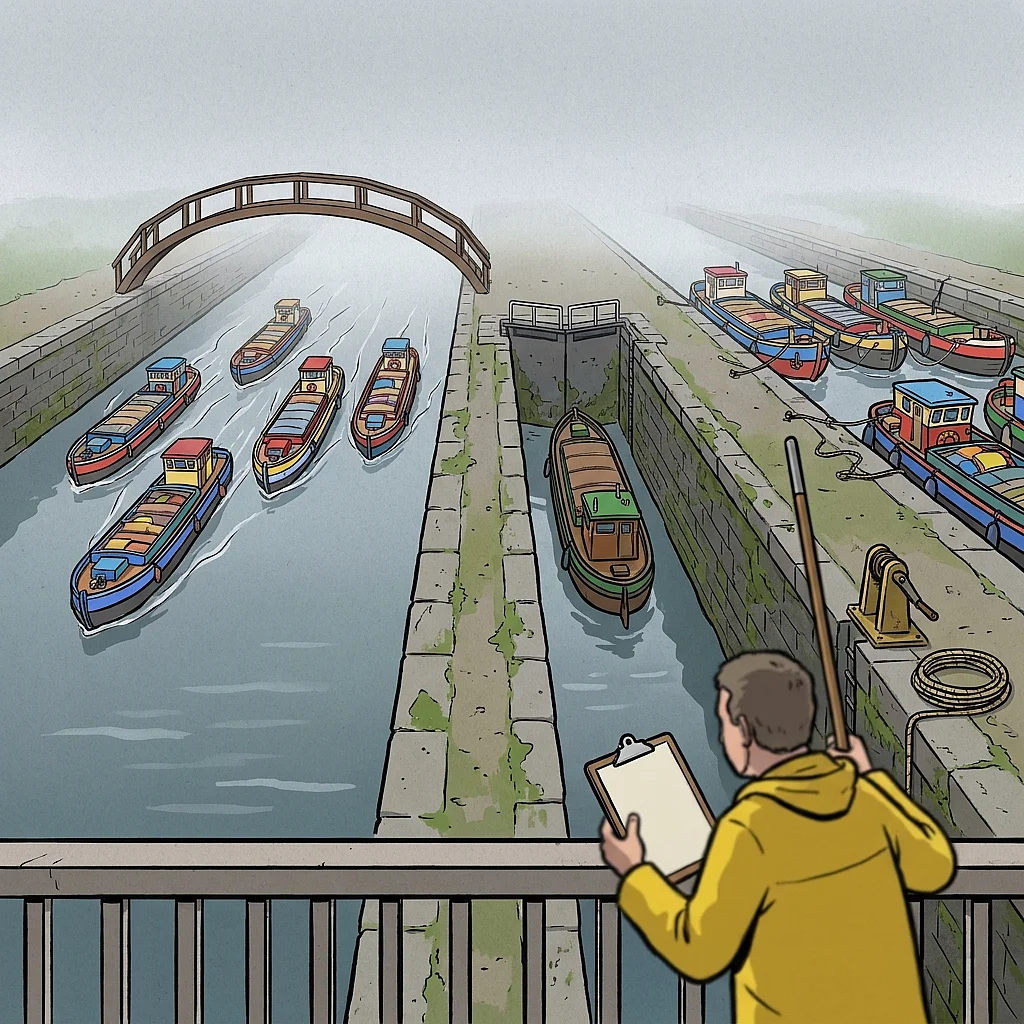
Google has made Gemini 4 Carbon generally available after a two-week testing phase.According to the available information, the model takes the top spot in several benchmarks, in some cases ahead of Anthropic's new model Fable 5.2, while working significantly more cheaply.At the same time, Google is showcasing coordinated agent teams with the "/swarm" feature, which divide complex tasks among themselves in real time.
For project leads, these are two separate pieces of news that are often lumped together: a more powerful and cheaper base model on the one hand, a new way of working with multiple agents operating in parallel on the other.Both have very different impacts on day-to-day project work.
What distinguishes an agent swarm from a chat window
In this context, an agent is an AI system that not only outputs text but independently plans sub-steps, calls tools and checks intermediate results.A swarm extends this principle: several such agents work on sub-tasks simultaneously and coordinate with each other during execution, instead of processing a long chain of tasks one after another.
The practical difference lies less in the quality of individual results than in the structure of the work.Instead of one instruction with one answer, a work process emerges with role distribution, intermediate states and dependencies.That is precisely what makes the technology interesting – and precisely what shifts the effort.
Where the benefit realistically lies today
Such a way of working becomes robust where tasks are clearly delimited, where there is a verifiable definition of "done" and where errors are noticed early.Typical candidates in web and TYPO3 projects are:
- Analysis of large codebases, for example before a migration: which extensions are affected, which templates use outdated calls?
- Routine work with high repetition, for example adapting many similar configuration files or updating naming conventions.
- Creating test cases and documentation drafts for existing code.
- Data preparation for content migrations, for example mapping old content structures to new elements.
The common denominator: the results can be verified mechanically or by a quick visual check.Where a human has to trace every partial result in full depth, the speed gain of a swarm evaporates – review then becomes the bottleneck.
Why price is a strategic factor
The fact that Gemini 4 Carbon, according to Google, works more cheaply than comparable models sounds like a footnote, but it is central to agent operations.A single chat dialogue incurs manageable costs.A swarm that tackles the same task from several directions, exchanges intermediate results and discards failed attempts consumes a multiple of that.
Falling costs per processing unit therefore determine whether a use case is economically viable at all.Use scenarios that failed a year ago because of running costs can suddenly become viable when prices change.Conversely: anyone who uses swarm features without cost control will quickly see unexpected bills on complex tasks.
Benchmarks are not project proof
Top rankings in benchmarks are a signal, but no substitute for your own testing.Benchmarks measure standardised tasks under controlled conditions.A real TYPO3 project brings grown structures, individual extensions, historical decisions and incomplete documentation – factors that are not represented in any test run.
Moreover, the ranking among providers is currently shifting at short intervals.The fact that Google is ahead of Anthropic's Fable 5.2 in several measurements describes a point in time, not a permanent order.An architecture that commits to exactly one model thus builds in an avoidable risk.
Where human control remains necessary
Several agents working in parallel create new questions that did not exist before.Three of them deserve particular attention:
- Traceability. If five agents have worked together on a result, it is harder in the event of an error to reconstruct which decision was made where.Logging the intermediate steps is not a convenience but a prerequisite.
- Permissions. Agents that call tools require access.The more agents are involved, the more important tight limits become – separate environments, read access instead of write access, no direct access to production systems.
- Objective setting. A swarm optimises what it is given.Whether a feature makes sense from a business perspective, whether a data structure fits the business model, whether an accessibility goal is achieved: these assessments remain with humans.
So the work does not disappear, it shifts.Less time flows into writing individual lines of code, more time into precise task descriptions, acceptance criteria and review.
A pragmatic start
Instead of a fundamental decision for or against agent swarms, a limited trial is advisable.A work package with a clear scope, known effort from earlier projects and a verifiable result makes sense – for example preparing an extension migration in a test environment.
What is measured then is not the feeling, but the throughput time including review effort, the proportion of results that were usable without rework, and the actual operating costs.
Only these figures provide a viable basis for larger steps.
Assessment
For web and software projects, the core competence is shifting from pure implementation to precise specification and reliable verification of results. Those who keep interfaces to AI services interchangeable and allow agents to work only in clearly delimited, well-monitored areas benefit from faster model cycles without committing to a single provider. What remains decisive is that responsibility for architecture, security and technical quality is not delegated to an agent team.


