
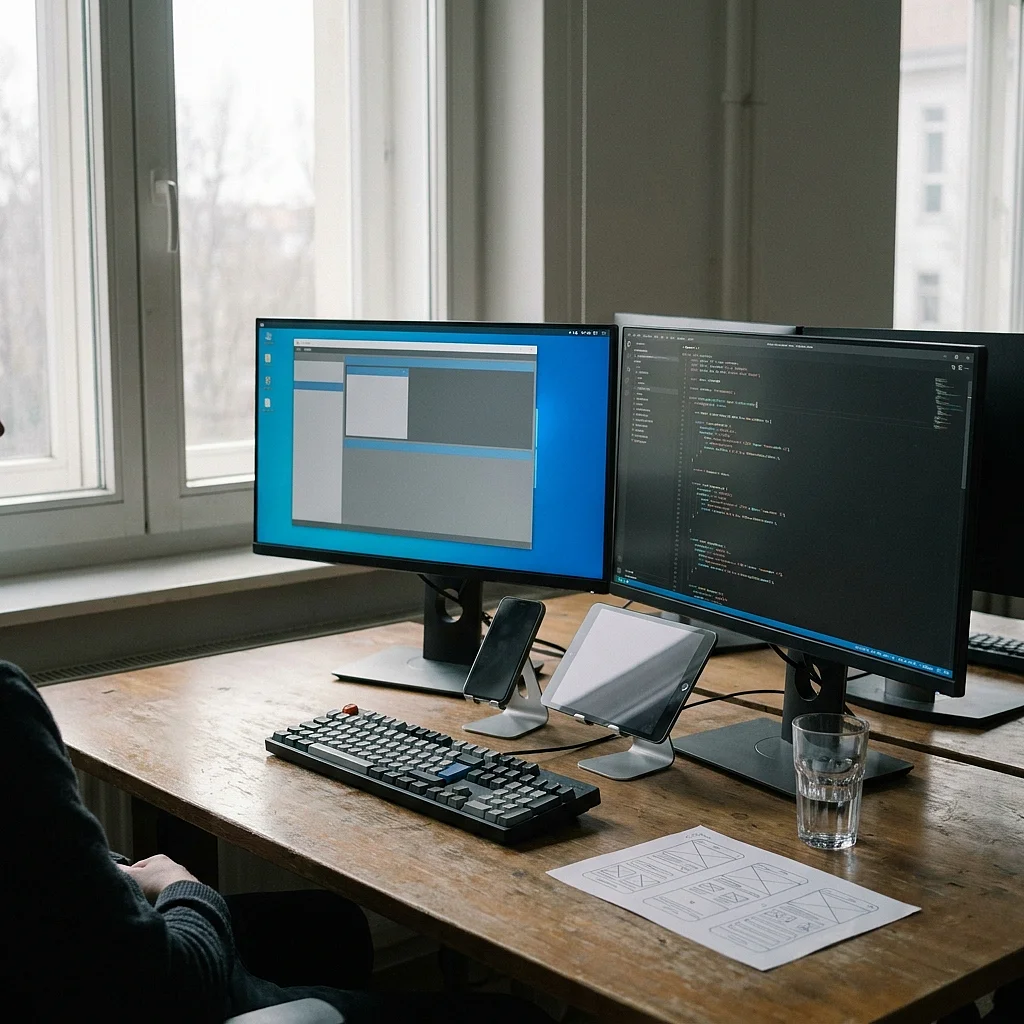
Compose Multiplatform, the Kotlin-based UI framework for cross-platform interfaces, has been released in version 1.12. The most notable new feature is an experimental MCP server for Compose Hot Reload. It is joined by an API, also marked as experimental, for fine-tuning windows and dialogs.
What an MCP server means in this context
MCP stands for Model Context Protocol, a standardised interface through which AI models and agents communicate with external tools and data sources. Instead of building a separate integration for each tool, a tool provides an MCP server to which various clients can connect.
Hot Reload, in turn, is the ability of a development environment to feed code changes into an already running application without restarting it. Anyone who changes a colour, a spacing or a component structure sees the result within seconds in the open window.
The combination of both building blocks produces a new quality: an agent that is supposed to change an interface does not stop at code output but can address the running state of the application via the interface. The return channel that was previously missing thus becomes addressable.
Why this is more than a minor detail
Until now, AI assistants in frontend development have largely worked blind. They generate markup, styles or component code and rely on developers evaluating the result in the browser or in the emulator. There is always a manual step between suggestion and visual control.
An MCP server on the hot reload mechanism shifts this boundary. The tool that was built anyway for fast feedback to humans becomes accessible to machines. This is a structural trend: development tools are getting a second, machine-readable facade alongside their user interface.
The note about the experimental status should be taken seriously. Experimental APIs can change between versions or disappear again. For production projects this means: observe, try out in prototypes, but do not build a load-bearing architecture on it.
Windows and dialogs: the second new feature
Also new is an experimental API for customising windows and dialogs. That sounds unspectacular, but it affects an area that regularly causes effort in cross-platform applications. Window frames, title bars and dialog behaviour differ significantly between operating systems, and it is precisely at these points that projects end up with special cases that are later difficult to maintain.
Anyone building desktop applications with Compose should take a look at this part, regardless of the AI topic. It addresses a classic point of friction in everyday work.
What agencies can take away from this
The news concerns a Kotlin framework, but the principle can be generalised. The question for every toolchain in future is: at which points in the existing build and design pipeline is there already feedback that so far only a human has read?
- Build outputs: Compiler messages, linter results and test reports are already available in machine-readable form. They are the most obvious candidates for an agent connection.
- Visual checking: Screenshot tests and visual regression comparisons provide a signal that goes beyond mere syntactic correctness.
- Runtime state: This is exactly where the hot reload approach comes in. What happens in the running application was previously difficult for tools to access.
- Design systems: Tokens, component libraries and spacing rules give an agent a framework within which it may move.
Such a connection only makes sense where there is verifiable feedback. An agent that suggests changes and cannot measure their effect produces work for the review. An agent that has to pass an automated check produces results that can be assessed reliably.
Limits and open questions
Machine-readable access to the running development process also raises questions that are technical in nature and have organisational consequences. Who is allowed to address such a server? Which data from the project leaves the local environment in the process? How is it logged which change was triggered by whom or by what?
These points have not yet been conclusively clarified for an experimental feature and should be checked before use in client projects. Especially for applications with sensitive content, the question of where a model runs and what it gets to see is not a sideshow.
It also remains open how roles in the team will shift. If an agent tries out interface changes independently, the work shifts from implementation to specification and evaluation. That requires clear acceptance criteria, otherwise the effort is merely relocated.
Assessment for web and software projects
For ongoing projects, this version initially changes little: an experimental feature in a specific UI framework is no reason for rebuilds. The direction is relevant, however, because tools that today are operated only by humans are gradually getting machine-readable interfaces, and anyone who has automated their build and test pipeline cleanly can add such connections later without rebuilding.The practical step therefore lies less in trying out individual agents than in the preparatory work: reproducible builds, automated visual checks and a documented design system are the prerequisites for AI-supported tools to be able to deliver anything verifiable at all.
Sources
- Compose Multiplatform 1.12: Experimental MCP server for hot reload — heise developer News


