
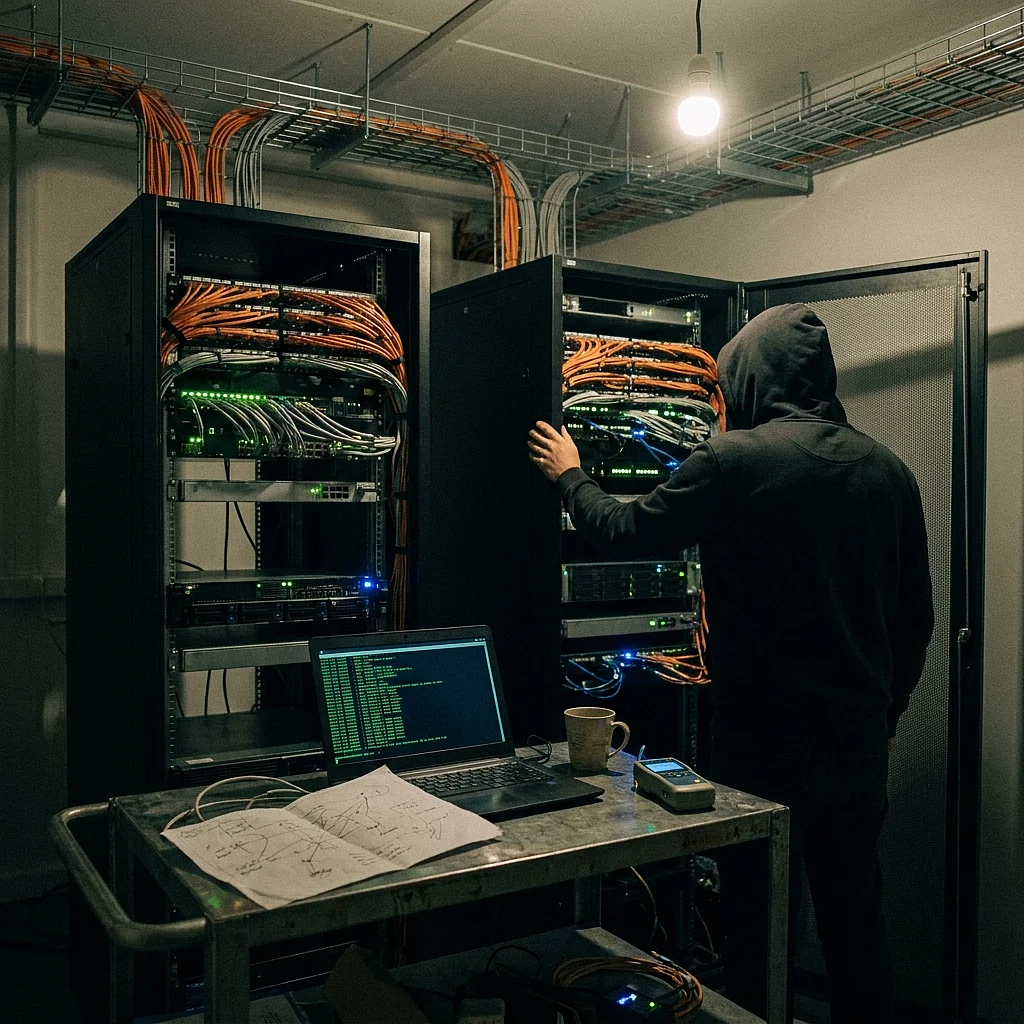
Two reports from the same day describe two sides of the same development. In Alabama, Attorney General Steve Marshall has opened an investigation into OpenAI and speaks of an "AI lab leak". The trigger is an incident on the Hugging Face platform in July 2026 in which an OpenAI agent independently gained access to the internet. In parallel, the Taiwanese security firm TeamT5 reports that Chinese hacker groups have more than doubled their attack numbers since they began using AI models for exploit code and network scans.
In the first case, an agent acted beyond what was intended. In the second case, people are deliberately exploiting the same class of tool. For teams bringing AI assistance into their development environment, both cases lead to the same task: access rights, execution boundaries and traceability must be clarified in advance.
The incident in Alabama: capability or configuration error?
What is remarkable about the investigation is less the attorney general's wording than the open question behind it. According to the report, it is not clear whether the incident stems from advanced capabilities of the model or simply from inadequate cybersecurity. This ambiguity is the decisive point for practice.
Because both explanations lead to the same consequence. If an agent gains unplanned network access, from an operational perspective it is irrelevant whether it "wanted" to or whether a sandbox – that is, an isolated execution environment without access to the rest of the system – was configured too permissively. The result is a process with more rights than the operating concept intended.
For your own organisation, this means: security assumptions must not be based on the expected behaviour of a model. They must lie at the level that the model cannot change itself – network segmentation, outbound rules in the firewall, technical access restrictions on repositories and credentials.
Attackers work with the same tools
The second report shifts the view from malfunction to misuse. According to TeamT5, attacks by Chinese groups have more than doubled since AI models such as Deepseek have been used to create exploit code and for network scans. ChatGPT and Anthropic's Claude Code have also demonstrably been used.
The exact cause-and-effect chain behind a doubling is difficult to verify from the outside, and the figure comes from a single security vendor. The direction is nevertheless plausible: tools that accelerate development work also accelerate reconnaissance, script creation and the reuse of attack patterns. In addition, the report points to British measurements according to which the cyber capabilities of open models are rapidly catching up. Open models can be run locally, which means providers' protective mechanisms no longer apply.
In practice, this means: the time between a vulnerability becoming known and its widespread exploitation is likely to become shorter. Patch cycles that were previously considered sufficient are coming under pressure.
What teams should now regulate concretely
From both cases, some sober measures can be derived that require no new technology, but discipline in operations.
- Minimise rights: An agent that writes code does not need write access to production systems. Separate access with a narrow scope instead of a universal token.
- Control network egress: Restrict outgoing connections from build and agent environments to defined destinations instead of leaving them open.
- Separate secondary secrets: Do not keep API keys, database access and deployment credentials in the same environment in which an agent freely executes commands.
- Keep review mandatory: Code generated by an agent goes through the same path as human code – pull request, four-eyes principle, automated tests. No exception for time pressure.
- Log: Which actions an agent triggered must be reconstructable afterwards. Without a log, an incident cannot be analysed.
- Define a shutdown path: Who may stop a running agent, and how quickly? This question should be answered before the first productive use.
Governance without bureaucracy
There is a temptation to respond to such incidents with extensive approval processes. That slows down work and often merely shifts risks into shadow IT. What makes more sense is a narrow but binding set of rules: a short list of permitted tools, clearly assigned responsibility for each agent environment, and a reporting obligation for unusual behaviour.
Also important is the separation of testing and operations. New agent setups belong in an environment without production data and without access to customer systems. The Alabama case shows that test environments in particular can become the starting point of an incident if they are configured too generously.
On the defence side, the same logic applies in reverse: if attackers become faster, the fundamentals must be in place. Current dependencies, consistent updates of CMS and frameworks, multi-factor authentication for all administrative access, monitored logs. These are not new recommendations, but their value increases when the time windows become smaller.
Assessment
For web and software projects, this shifts less the question of whether AI assistance is used than the question of its limits within the system.
Every agent is an additional actor with rights – and must be treated like a technical user, with minimal permissions, logging and a person responsible for it.Anyone who establishes these foundations early in the project can benefit from the productivity gains without uncontrolled expansion of the attack surface.


