
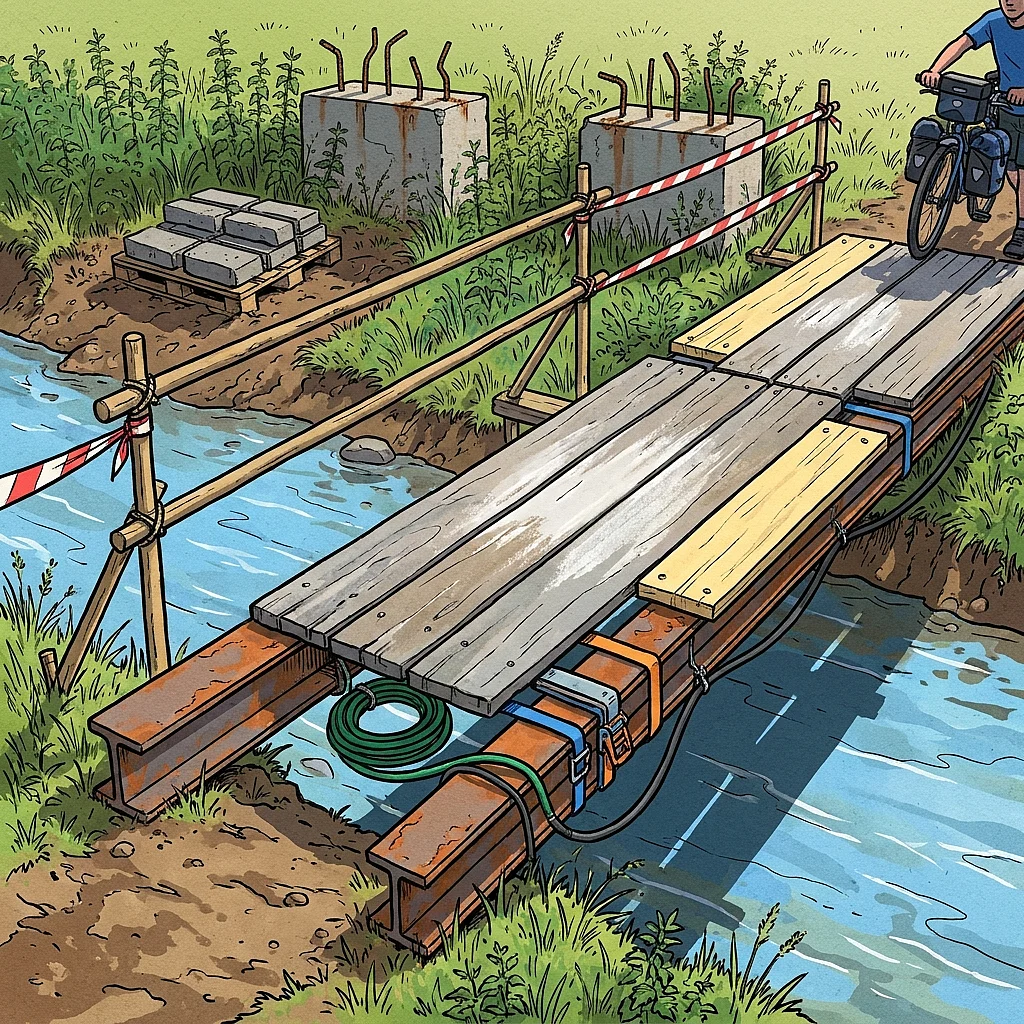
Prompt-driven development, colloquially also called vibe coding, describes a way of working in which developers mainly describe in natural language what is to be created, and an AI agent writes and executes the code for it. A current example makes tangible how far this approach now carries.
The AI researcher and OpenAI co-founder Andrej Karpathy created a video platform called HackerTube with Anthropic's Claude Code over a weekend. The starting point was 43 million comments from the community platform Hacker News, of which 6,454 curated videos ultimately remained. According to the description, the AI agent took over almost all of the work – from filtering the volume of data to setting up the server. A second platform was then created within three minutes.
Why this example is revealing
What is interesting is less the platform itself than the composition of the tasks. It is not a pure frontend experiment, but a chain of typical project steps: obtain data, clean it, filter it by relevance, build an interface, make the whole thing operational on a server. Precisely this chain usually costs the most time in classic projects, because between the steps lie many small, unglamorous tasks.
Added to this is the scale of the data. 43 million comments cannot be reviewed manually. An agent that designs, tests, discards and rewrites filter logic can run through such loops much faster than a human who implements every variant themselves. The second platform in three minutes suggests that once an established setup exists, it can be varied with little effort.
What companies can derive from this
For small and medium-sized enterprises, the obvious use case is not the public platform, but the internal tool. Many organisations have data sets that nobody evaluates because a suitable tool is missing and a project proposal for it seems disproportionate: exports from the CRM, ticket histories, log files, product data from various sources.
This is exactly where the calculation shifts. If a functional prototype is created in hours instead of weeks, the threshold for trying out an idea at all drops. Instead of discussing requirements for a long time, a first version can be built, looked at and assessed. Wrong decisions become cheaper because less effort is invested in them.
- Prototypes and feasibility studies: An idea becomes visible before a budget has to be requested.
- Internal evaluations: Data sets can be prepared without a separate product being created for them.
- One-off tasks: Migrations, data cleanups and imports that arise only rarely and whose code does not need to be maintained afterwards.
Where the limits lie
A weekend project by a single person is not proof that every software project can be handled this way. Several differences must be noted.
First, the person acting here is extremely experienced. Someone who can precisely describe which architecture and which filter logic are desired guides an AI agent differently from someone who does not have an overview of the solution space. The quality of the instructions remains a bottleneck, and it depends on expertise.
Second, such projects typically lack the requirements that cause the greatest effort in a corporate context: permission and role concepts, data protection, integration with existing systems, accessibility, audit compliance, maintainability over years. A prototype must work; a production system must also work when edge cases, load peaks and attacks occur.
Third, quickly generated code creates an accountability problem. If nobody in the house has read the code, then nobody knows how it behaves when changed. That is irrelevant for an experiment and a real risk for a system on which business processes depend.
A practicable approach
A clear separation seems sensible. For exploratory work – prototypes, internal aids, one-off data tasks – prompt-driven development is an excellent tool, because speed creates the greatest benefit here and a mistake has manageable consequences.
For everything that goes into production, the familiar mechanisms remain necessary: code review by humans, automated tests, documented architecture decisions, a regulated deployment process. The AI agent then accelerates implementation within this framework, but does not replace it.
Equally important is the question of what happens to a successful prototype. The experience from classic projects still applies unchanged: temporary solutions that prove themselves remain. Anyone who determines from the outset whether a tool is a throwaway product or the preliminary stage of a maintained system avoids later legacy burdens.
Assessment
For web and software projects, what shifts above all is the cost structure of the early phase: ideas can be tested before they are specified, and the question of benefit moves ahead of the question of effort. However, the difficult part remains where it always was – in integration, operation and long-term maintenance.
What matters, therefore, is not whether AI agents are used for development, but how clearly a distinction is made between rapid experimentation and a robust production system.


