
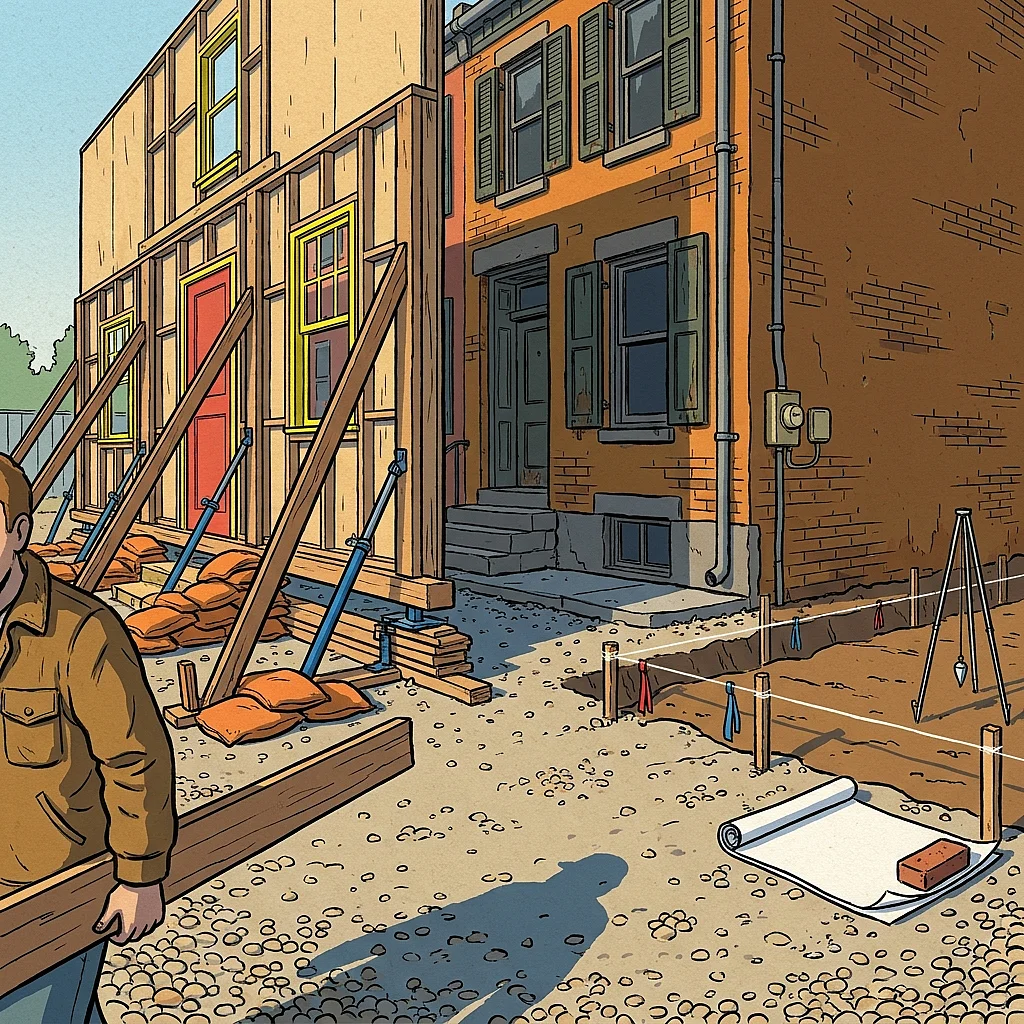
In developer circles, a cautionary tale about expectation management is currently circulating: a developer created a replica of Photoshop with AI support and concluded that traditional software development is therefore at an end. The developer and commentator Golo Roden clearly contradicts this interpretation. His core argument can be reduced to a simple formula: copying has become cheap, deciding has not.
For companies currently thinking about web portals, product catalogues or internal tools, this is more than a technical debate. The question behind it is: what can be created in hours in future – and what still requires planning, responsibility and experience?
What lies behind the term vibe coding
Vibe coding refers to a way of working in which software is created predominantly through natural-language instructions to an AI model. Instead of programming line by line, you describe the desired behaviour, check the result and refine it. For interfaces, small tools and demonstrations, this works surprisingly well.
This is precisely the cause of the current hype. A user interface that looks like a well-known program can now be created comparatively quickly. This seems spectacular because the visible result comes close to something that took decades to develop.
Why rebuilding is the easier half
A rebuild has a decisive advantage over a new development: the target picture already exists. Which functions there are, how they are arranged, which work steps users expect – all of this is predetermined and no longer needs to be worked out.
In real projects, this target picture is missing. There, the work begins with questions that no model can derive from a prompt:
- What problem should the software actually solve, and for whom?
- Which cases are standard, which are exceptions – and which exceptions may deliberately be ignored?
- Which data is authoritative, where does it reside, who may see it?
- What happens if part of the system fails or responds slowly?
- Which decision will hold for ten years, which must be revised in six months?
These questions are not programming tasks but product and architecture decisions. They require context about the company, about existing systems, about legal frameworks and about the people who will later work with it. A language model can support this, run through variants and sharpen formulations – but the responsibility for the choice remains with people.
The demo and the product are two different things
Between a prototype that convinces in a demonstration and an application that remains in operation for years lies the greater part of the work. A prototype has to make one path work. A product has to deal with incomplete input, concurrent users, growing data volumes, permissions, logging, security requirements and later changes.
Added to this is maintainability. Code that was generated quickly is not automatically code that a team will still understand and be able to change safely in two years. Where structure is lacking, the cost of every adjustment rises – and in practice, adjustments are the norm, not the exception.
Where prompt-driven work creates real value
The conclusion from this is expressly not to avoid AI-supported development. It merely shifts where the effort arises. Its use is particularly viable where quick results reduce uncertainty:
- Clarifying concepts: Instead of discussing wireframes, a clickable variant can be created and tested with real users. Misunderstandings show up early, while changes are still cheap.
- Comparing variants: Placing two or three operating concepts side by side used to be expensive. Today it is a realistic option in the preliminary project.
- Internal auxiliary tools: Small evaluations, import aids or checklists with manageable risk and limited lifespan.
- Routine parts of implementation: Scaffolding code, test cases, documentation drafts, translations between formats – under specialist review.
What is decisive is conscious classification: a prototype is an instrument of insight. If it is declared a production system without review, risk is shifted into the future instead of being reduced.
The questions that come before the first prompt
Anyone bringing AI-supported development into a project should clarify in advance what role the result will play. Three determinations at the outset are helpful:
- Purpose: Is the result for learning or for operation? The quality standard and depth of review depend on this.
- Responsibility: Who reviews the generated code from a specialist and security perspective before it enters a system that touches customer data?
- Continued life: What happens to the prototype after the decision – is it discarded, revised or used as a specification?
These three points take little time and prevent the most common mistake: that a convincing demo quietly becomes a product commitment.
Classification for web and software projects
For web and software projects, the weighting shifts, not the underlying logic: interfaces and end-to-end drafts are created faster, while requirements clarification, data models, interfaces and operating concepts continue to be decisive for success or follow-up costs.
It therefore makes sense to invest the speed gained in the early phase – in robust decisions rather than more code.Anyone who introduces AI as a tool in the development process and leaves responsibility for architecture and product with experienced people gains pace without squandering the maintainability of the years ahead.
Sources
- Commentary: Photoshop rebuilt with AI – copying is cheap, deciding is not — heise developer News


